
Industrial Noise vs Boundary Noise: What Is the Difference?
Understand the difference between industrial sound level measurements and boundary noise measurements, and when each type of assessment may be required.
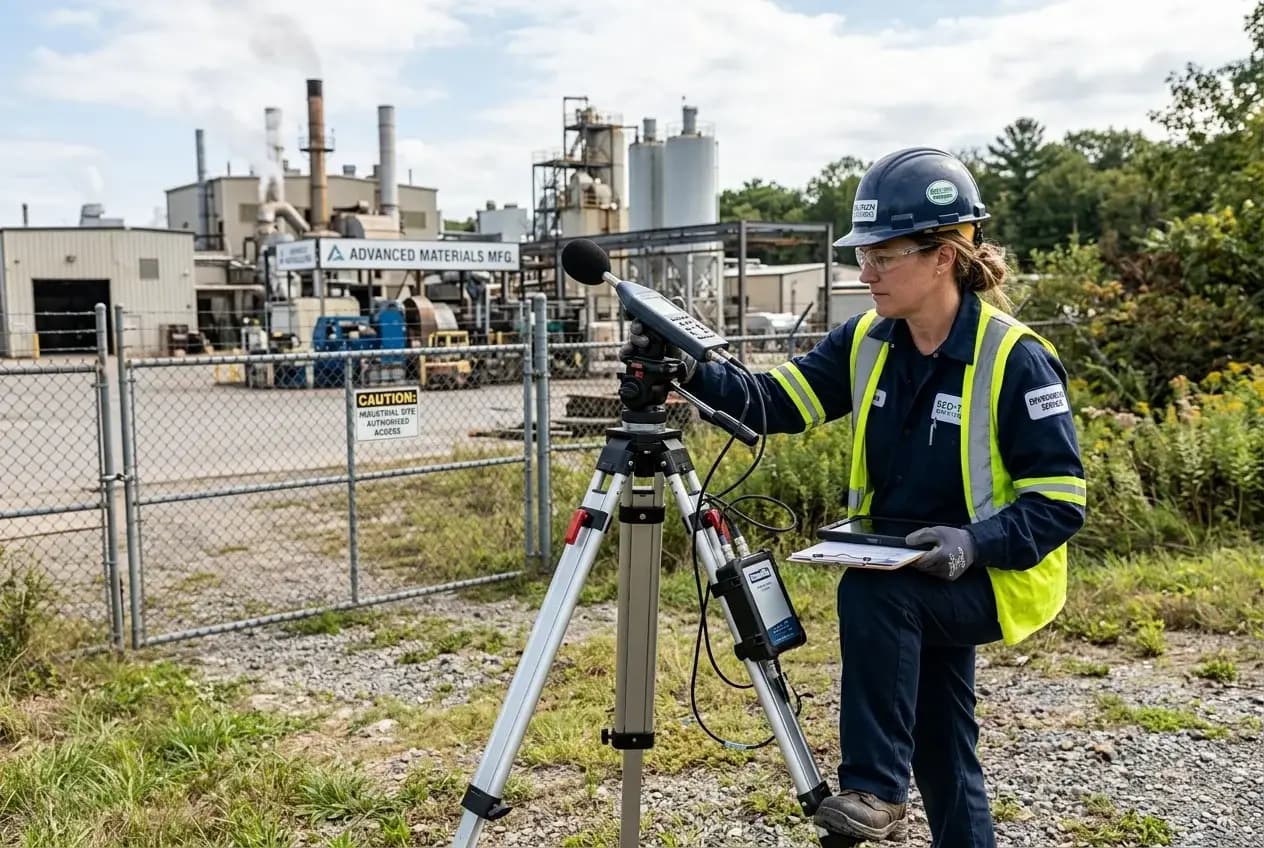
Industrial noise and boundary noise are not the same thing
Noise can be assessed for different reasons depending on where the measurement is taken and what risk is being evaluated.
For an industrial facility, two important concepts are industrial sound level measurement and boundary noise measurement.
The CEA regulates industrial noise and identifies noise measurement and control as part of environmental management in Sri Lanka.
What is industrial sound level measurement?
Industrial sound level measurement focuses on noise within or around industrial operations.
Potential sources include:
The purpose may be to understand noise exposure, identify significant sources and support workplace or environmental assessments.
IW Labs provides industrial sound level measurement services for industrial environments and states that assessments can identify high-noise sources, peak exposure points and continuous noise levels.
What is boundary noise measurement?
Boundary noise measurement evaluates noise at or around the boundary of a site.
This is particularly important where industrial operations may affect neighbouring properties or surrounding communities.
The CEA's noise regulations include requirements concerning noise measurement procedures and equipment.
Why does the difference matter?
Imagine a factory where a machine produces significant noise inside the production area.
The internal measurement may tell you about the workplace environment.
However, the noise reaching the site boundary answers a different question:
How much noise is reaching the surrounding environment?
Therefore, a facility may need different measurements depending on its objectives.
When should a business consider noise assessment?
Noise testing may be useful when:
Evaluating potential environmental impacts
Why calibrated equipment matters
Reliable noise measurements depend on appropriate instruments, correct measurement procedures and suitable site conditions.
IW Labs states that its industrial sound measurements use calibrated sound level meters and recognized methodologies.
Choose the right noise assessment
The correct testing approach depends on what you are trying to determine.
If the concern is worker exposure, workplace-focused monitoring may be appropriate.
If the concern is environmental noise reaching neighbouring properties, boundary measurements may be more relevant.
Need industrial or boundary noise measurements in Sri Lanka? Contact IW Labs to identify the appropriate assessment for your facility.
More context
Related insights.
IW Labs is a specialist environmental testing laboratory. Get in touch to discuss your testing scope, parameters, and reporting requirements.